


Wealth Management in France for Expats
Updated in August 2026 — Written by Les Experts du Patrimoine
Homepage » Wealth Management in France for Expats
Moving to France changes more than your address. It can affect where you pay tax, how your investments are treated, which retirement solutions are suitable, how your property is owned and what happens to your assets if you die. For foreign nationals, expatriates and internationally mobile families, wealth management in France therefore requires a coordinated approach rather than a collection of isolated financial products.
Whether you are preparing to relocate, already living in France or dividing your time and assets between several countries, the first objective is to understand how the French system interacts with your personal circumstances. Nationality alone does not determine your tax position, and a strategy that worked well in your previous country may become inefficient—or create unexpected reporting obligations—after your move.
A qualified professional can help you review your assets, income, family situation and long-term objectives before recommending a suitable course of action. The Experts du Patrimoine directory helps English-speaking residents and future residents identify wealth management professionals throughout France.
What does wealth management mean in France?
Wealth management is the organisation, protection and development of your personal and professional assets over time. In France, it may cover financial investments, taxation, property, retirement, insurance, estate planning, business ownership and family protection.
The process usually begins with a complete wealth assessment. This is not simply a list of bank accounts and investments. A useful assessment considers:
your current and future countries of residence;
your income and its country of origin;
your cash, investments, pensions and property;
your debts and financial commitments;
your marital status and family structure;
your tax obligations in France and abroad;
your tolerance for risk and need for liquidity;
your plans for retirement, inheritance or the sale of a business.
Once this information has been collected, the adviser can identify inconsistencies, risks and opportunities. The resulting strategy may involve wealth building, investment restructuring, wealth diversification, retirement preparation or estate planning.
For an international household, the key word is coordination. Tax, investment and succession decisions cannot be considered independently when two or more legal systems may apply.
Why is moving to France a major financial event?
Relocation can change the rules that apply to your worldwide income and assets. It may also affect the suitability of accounts, trusts, companies, insurance policies or investment wrappers held abroad.
The date on which your situation changes matters. Decisions made before becoming resident in France may have different consequences from decisions made afterwards. This is why advance planning is particularly valuable for people who own a business, receive foreign pension income, hold substantial investments, have beneficiaries in several countries or retain property abroad.
Your existing arrangements may not remain efficient
An investment account that is tax-efficient in the United Kingdom, the United States, Switzerland or another country does not automatically receive the same treatment in France. Some foreign structures may create additional declarations. Others may produce income or capital gains that are taxed differently once you become a French tax resident.
The answer is not necessarily to close everything before moving. Hasty action can trigger taxes, penalties or the loss of valuable contractual benefits in another jurisdiction. The better approach is to review each asset individually and understand its French and foreign treatment before taking action.
Your financial priorities may change
Relocating often involves purchasing or renting a home, changing employment status, transferring savings, obtaining health cover and rebuilding an emergency fund in euros. A strategy designed for long-term growth may need to be temporarily adjusted to provide greater liquidity and reduce currency risk.
A comprehensive review can establish which assets should remain available, which can be invested for the long term and which require specialist tax or legal advice.
Understanding French tax residence
Tax residence is one of the first questions to address because it influences the scope of your French tax obligations. French domestic law considers several connecting factors, including the location of your household, your main place of residence, your principal professional activity and the centre of your economic interests.
However, domestic rules are only part of the analysis. If France and another country both regard you as resident, the relevant double taxation treaty may contain tie-breaker rules. These commonly examine your permanent home, centre of vital interests, habitual residence and nationality, although the wording and outcome depend on the treaty concerned.
Worldwide income and double taxation treaties
French tax residents are generally required to report income from French and foreign sources, subject to the provisions of applicable international tax treaties. This does not necessarily mean that the same income is taxed twice. Treaties may allocate taxing rights to one country or provide a tax credit or exemption mechanism.
The treatment can differ according to the type of income. Salary, self-employment income, rental income, dividends, capital gains and public or private pensions may each follow different rules. The location of the payer is not always enough to determine where tax is due.
Tax optimization in this context should mean lawful, documented planning based on your full international position—not a promise to make tax disappear with a conveniently mysterious product.
Foreign accounts and assets
French residents may have reporting obligations relating to certain bank accounts, investment accounts, digital-asset accounts, insurance policies or legal arrangements held outside France. The exact requirements depend on the nature and location of the asset.
Before your first French tax return, prepare a complete inventory with account numbers, institutions, countries, opening dates, values, income and transactions. Good records make professional advice more accurate and reduce the risk of omissions.
French real estate wealth tax
France has an annual real estate wealth tax, known as the impôt sur la fortune immobilière or IFI. It may apply when the net taxable value of relevant real estate assets exceeds the statutory threshold. The scope can differ for French residents and non-residents, and tax treaties or special rules may affect the result.
Property held through a company or investment vehicle is not automatically outside the IFI rules. If you own significant property in France or abroad, obtain an individual assessment of the assets, exemptions and deductible debts that may be taken into account.
Building a financial plan before moving to France
The most useful planning often takes place several months before relocation. At this stage, you still have time to compare options and coordinate advisers in both countries.
Create a complete cross-border balance sheet
List your assets and liabilities by country, currency, owner and tax wrapper. Include current accounts, savings, shares, bonds, funds, pension rights, insurance policies, company interests, property, loans and guarantees.
Next, identify the purpose of each asset. Is it intended for daily expenses, a property purchase, children’s education, retirement, inheritance or long-term growth? An asset without a defined purpose is difficult to manage and even harder to evaluate.
Review liquidity and currency exposure
If your future expenses will mainly be in euros, holding all your accessible savings in another currency can expose your short-term plans to exchange-rate movements. Conversely, converting every asset at once may be unnecessary and expensive.
A staged currency strategy can separate near-term euro requirements from long-term international investments. Your emergency reserve should normally be accessible, understandable and free from avoidable market risk.
Check the consequences before selling or transferring assets
The timing of a sale, dividend, pension withdrawal, company distribution or transfer between family members can materially affect the tax result. Compare the position before and after your change of residence, taking into account any exit taxes, treaty provisions and local reporting duties.
Complex pre-arrival planning should involve appropriately qualified tax and legal advisers in the relevant jurisdictions. A French wealth management adviser can coordinate the overall strategy but should not replace foreign advice where another country’s law remains involved.
Choosing investments while living in France
France offers a wide range of savings and investment solutions, from regulated savings accounts to securities portfolios, life insurance contracts, retirement plans, property funds and direct real estate. The right combination depends on your residence, investment horizon, tax situation, objectives and country of nationality.
You can explore the main investment products offered by wealth management experts before discussing their suitability with a professional.
Assurance-vie
French assurance-vie is an investment and estate-planning contract rather than ordinary life insurance in the English-speaking sense. Depending on the contract, it can provide access to euro-denominated guaranteed funds and market-linked investment units. Its tax treatment evolves with the age of the contract, the date and amount of contributions, and the way withdrawals are made.
It can be useful for long-term saving, flexible withdrawals and beneficiary planning, but it is not universally suitable. Foreign tax residence, future relocation and nationality—particularly where another country applies its own tax or reporting regime—must be considered before subscribing.
Securities accounts and diversified portfolios
A standard securities account can hold shares, bonds, exchange-traded funds and investment funds without the investment restrictions of certain tax-advantaged wrappers. It can therefore be suitable for internationally diversified portfolios, although income and gains may be taxable.
Diversification should cover more than the number of holdings. A robust portfolio considers asset classes, geographic exposure, currencies, sectors, issuers, time horizons and liquidity. A collection of ten funds invested in the same market is not genuine diversification; it is merely repetition wearing different labels.
PEA and French retirement products
The Plan d’Épargne en Actions (PEA) is a French equity savings plan with specific eligibility, investment and tax rules. The Plan d’Épargne Retraite (PER) is designed for retirement saving and may offer tax advantages in return for reduced access to the funds, subject to statutory exceptions.
These products can be relevant to some French residents but should be assessed against your expected length of residence, marginal tax rate, retirement country and the treatment applied by any other jurisdiction connected to you. Retirement planning should also include existing foreign and French pension rights rather than focusing only on new contributions.
Real estate and property investment
Property remains central to many wealth strategies in France, whether as a main home, rental investment or indirect holding through a property fund. The analysis should include purchase costs, financing, ongoing taxes, maintenance, rental rules, income taxation, capital gains and eventual inheritance.
The legal form of ownership matters. Buying personally, jointly, through an indivision arrangement or via a French property company such as an SCI can lead to different management and succession consequences. An SCI is not a magic tax shelter and should not be created without understanding its legal, accounting and cross-border implications.
A real estate professional, broker and notary may each contribute different expertise to a purchase.
Protecting your family and lifestyle in France
Wealth management is not limited to investment performance. A plan can appear successful on a spreadsheet while leaving the family exposed to illness, death, incapacity, loss of income or legal uncertainty.
Wealth protection begins by reviewing health cover, borrower insurance, income protection, death benefits, professional insurance, emergency savings and the ownership of major assets.
Health cover and social protection
Access to French health insurance depends on factors such as residence, employment status, country of origin and any applicable social security agreement. Employees, self-employed people, retirees and individuals posted temporarily to France may follow different procedures.
Private or supplementary health insurance may also be appropriate. Do not assume that an existing foreign policy will provide equivalent long-term cover after you become resident in France.
Marriage, civil partnerships and property ownership
Your marital property regime can affect the ownership and management of assets, responsibility for debts and the division of property following divorce or death. International couples may have connections with several legal systems, particularly if they married abroad, signed a marriage contract or acquired assets in different countries.
A French lawyer or notary can review the legal position and coordinate with foreign counsel where necessary.
Estate planning and inheritance across borders
International estate planning requires both civil-law and tax analysis. The law governing who inherits is not necessarily the same as the law determining where inheritance tax is paid. Nationality, habitual residence, the location of assets, wills, marital regime and tax treaties can all be relevant.
Review your will after moving
A will written abroad should not simply be assumed invalid—or perfectly effective—in France. It needs to be reviewed in the context of your complete estate. In some situations, a choice of national law may be possible under European succession rules, but that choice does not automatically determine inheritance taxation.
The aim is to ensure that your documents are consistent, that assets can be identified and that instructions in one country do not contradict arrangements in another.
Beneficiary clauses and family protection
The beneficiary clauses in life insurance and retirement contracts should be reviewed after marriage, divorce, birth, death or relocation. Standard wording may not reflect a blended family, vulnerable beneficiary or cross-border estate.
A well-designed wealth transfer strategy may combine wills, gifts, ownership arrangements, insurance contracts and family governance. It should preserve sufficient resources for the donor and avoid focusing on tax at the expense of legal security.
Wealth management for business owners and professionals
Moving to France while owning or managing a foreign company raises additional questions. The location from which decisions are made, the way remuneration is structured and the interaction between personal and corporate taxation may all require analysis.
Business owners should review shareholdings, shareholder agreements, protection against incapacity, business succession and the consequences of a future company sale. A strategy for investing sale proceeds should ideally be prepared before the transaction, not during the celebratory dinner after completion.
Members of the liberal professions may also need advice on professional structures, pension arrangements, insurance and the separation of business and personal assets.
Which wealth management professional should you consult?
There is no single professional who handles every financial, tax and legal issue. The most effective approach often involves a lead adviser working with specialists.
Wealth management advisers and financial investment advisers
A Wealth Management Adviser (CGP) can take a broad view of your objectives and coordinate investment, tax, retirement and estate-planning considerations. Depending on the services provided, the adviser may hold several regulated statuses.
A Financial Investment Advisor (CIF) provides regulated investment advice within the scope of the applicable French framework. Ask the adviser to explain their registrations, professional associations, insurance and method of remuneration.
Private banks, family offices and asset managers
Private banking may combine banking, financing and investment services, often for clients meeting certain asset requirements. A Family Office can coordinate complex family wealth, governance and multiple advisers. An asset management company manages investment funds or portfolios under a defined mandate.
The right choice depends on the complexity of your affairs, the services required and whether you want independent advice, delegated management or broader administrative coordination. See the overview of wealth management professionals in France to compare their roles.
Notaries, lawyers, brokers and insurance specialists
Notaries are central to French property transactions, marriage contracts, gifts and estates. Lawyers advise on legal and tax matters within their field of expertise. Brokers compare financing or insurance solutions, while an insurance agent represents or distributes insurance products.
A trustworthy adviser recognises where their competence ends and brings in another professional when necessary.
How to choose an adviser for your move to France
Cross-border experience and the ability to communicate clearly in English are valuable, but they are not substitutes for regulation, competence and transparency.
Before appointing a professional, ask:
Do you regularly advise clients who have moved to France from another country?
Which regulated statuses and registrations do you hold?
Which parts of my situation can you advise on directly?
Will you coordinate with my foreign tax adviser, lawyer or accountant?
How are you paid: fees, commissions or a combination of both?
Are your recommendations limited to certain providers or products?
How will risk, costs and potential conflicts of interest be explained?
How often will my plan be reviewed?
You should receive clear written information about the scope of the engagement, fees, risks and complaints procedure. Avoid anyone who promises guaranteed high returns, creates urgency around a product or dismisses the need to examine your foreign assets.
The directory explains how wealth management experts are listed and verified and how the Experts du Patrimoine directory works.
Finding an English-speaking wealth expert near you
Wealth management is shaped by national law, but local knowledge remains useful for property, professional networks and face-to-face support. Experts du Patrimoine lists professionals across France, including:
Île-de-France, including Paris and its surrounding business centres;
Auvergne-Rhône-Alpes, including Lyon and the Alpine region;
Nouvelle-Aquitaine, including Bordeaux and the Atlantic coast;
Occitanie, including Toulouse and Montpellier;
Provence-Alpes-Côte d’Azur, including Marseille, Nice and the French Riviera;
Brittany, Normandy and Pays de la Loire.
Remote advice can be practical, but confirm that the professional is authorised to provide the required service and is comfortable managing cross-border documentation.
A practical wealth management checklist for newcomers to France
Before your move
Confirm the likely date and basis of your French tax residence.
Review the relevant double taxation treaty.
Inventory all assets, debts, income and pension rights.
Obtain valuations and retain acquisition records.
Review foreign accounts, trusts, companies and insurance policies.
Estimate your euro liquidity requirements.
Compare the consequences of major transactions before and after moving.
Ask French and foreign advisers to coordinate where necessary.
During your first year in France
Establish suitable banking and emergency savings arrangements.
Confirm health insurance and social security coverage.
Prepare for foreign-account and worldwide-income reporting.
Review investment suitability under French rules.
Update wills, beneficiary clauses and powers of attorney.
Check property ownership and financing arrangements.
Consolidate important documents in a secure, accessible record.
Every year afterwards
Review tax residence and treaty exposure if your circumstances change.
Rebalance investments and reassess currency risks.
Update your plan after a birth, marriage, divorce, inheritance or business sale.
Check whether retirement and estate objectives remain realistic.
Review adviser fees, performance and service quality.
Frequently asked questions about wealth management in France
Do I need a wealth management adviser to move to France?
There is no general requirement to appoint a wealth management adviser when moving to France. However, professional advice can be particularly valuable if you have assets or income in several countries, foreign pensions, company interests, substantial property, complex family arrangements or uncertainty about your French tax and reporting obligations.
When should I seek wealth management advice before moving to France?
Ideally, you should begin several months before becoming a French tax resident. Pre-arrival planning provides time to review your investments, pensions, property, business interests and other assets before your tax position changes. If you already live in France, it is still worth reviewing your arrangements, particularly before a major investment, property purchase, pension withdrawal, gift or inheritance decision.
Will France tax all my foreign income?
French tax residents are generally required to declare income from both French and foreign sources. However, this does not necessarily mean that the same income will ultimately be taxed twice. The tax treatment depends on French law, the nature and source of the income and any applicable double taxation treaty between France and the other country.
Can I keep my foreign bank and investment accounts after moving to France?
In many cases, yes, provided that the bank or investment provider continues to accept clients who are resident in France. However, foreign accounts and certain investments may create French reporting and tax obligations. It is also important to determine whether investments that were appropriate in your previous country remain suitable once you become resident in France.
Are French investment products always better for French residents?
No. French investment products may provide useful tax, estate-planning or administrative advantages for French residents, but they are not automatically the best solution. The appropriate choice depends on your objectives, investment horizon, risk profile, liquidity requirements, costs and connections with other countries.
Can one adviser deal with both French and foreign tax and inheritance rules?
Some French wealth management professionals have extensive experience working with international clients, but a professional authorised in France cannot automatically advise on the tax, legal or inheritance rules of every other country. Complex cross-border situations often require coordinated advice from appropriately qualified professionals in each relevant jurisdiction.
How can I find a wealth management adviser in France?
You can use the Experts du Patrimoine directory to identify wealth management professionals operating across France. When comparing advisers, consider their regulatory status, areas of expertise, experience with international clients, spoken languages, fees and ability to coordinate with your existing tax, legal and financial advisers.
Find a wealth management expert in France and discuss your move, current situation and long-term objectives with a professional suited to your needs.
This guide provides general information and does not constitute personalised financial, tax or legal advice. French rules and international agreements may change, and their application depends on individual circumstances.
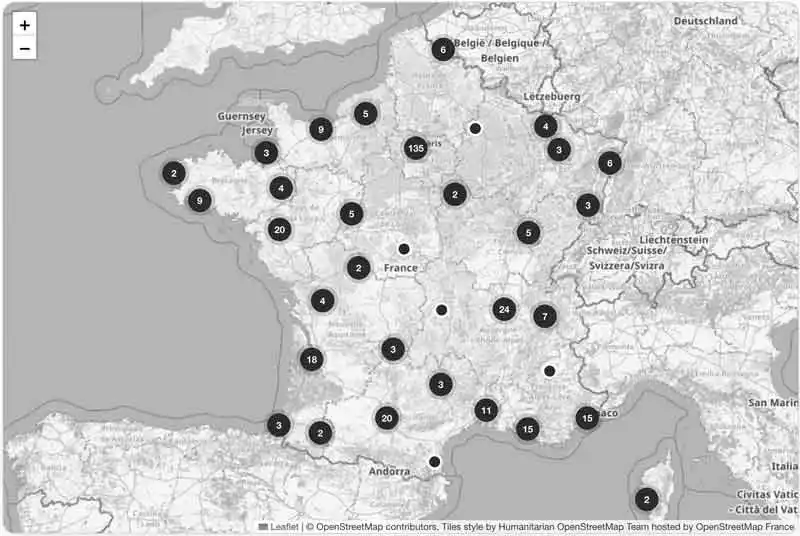
Search for a wealth management advisor among the 3 34 firms in the directory.
