


How can you check whether a wealth management advisor is trustworthy?
Updated in August 2026 — Written by Les Experts du Patrimoine
Homepage » How can you check whether a wealth management advisor is trustworthy?
Working with a wealth management adviser can be an important step when structuring your investments, preparing for retirement, purchasing property in France or planning the transfer of your assets. This is particularly true if you have recently moved to France, are planning to settle here or hold assets in several countries.
However, not all professionals presenting themselves as wealth management advisers necessarily have the same expertise, experience or regulatory authorisations. Before sharing detailed financial information or acting on a recommendation, it is therefore essential to check the professional’s identity, regulatory status and the exact scope of the services they are authorised to provide.
In France, wealth management is not governed by a single professional status. Instead, the various wealth management services offered by an adviser may fall under several separate regulatory frameworks.
Depending on their activities, a professional may provide financial investment advice, distribute insurance products, arrange banking or credit services, or carry out property transactions. Each regulated activity may require a specific registration, professional status, insurance policy or authorisation.
These French statuses may not have an exact equivalent in your country of origin. Checking the appropriate official registers is therefore the first step towards establishing whether an adviser is legally authorised to provide the services they are offering.
Check registration with ORIAS
Many wealth management advisers in France operate under one or more regulated statuses. Where applicable, these statuses must be registered with ORIAS, the official French register of intermediaries in insurance, banking and finance.
The public ORIAS register allows you to search for a professional by name, company or registration number and check whether the required registrations are currently active.
The statuses most commonly encountered in wealth management include:
A professional carrying out one of these regulated activities must hold the corresponding registration. Depending on the status concerned, they may also be subject to requirements relating to professional competence, continuing training, professional indemnity insurance and, where applicable, a financial guarantee.
A CIF must also belong to a professional association approved by the Autorité des marchés financiers (AMF).
Real estate activities are governed by a separate framework. A professional carrying out property transactions in France must generally hold the appropriate professional card, commonly known as the carte T, issued by a Chamber of Commerce and Industry. You can consult the official CCI register to verify a real estate professional.
For international clients, checking these statuses is particularly important, as French regulatory titles may not have a direct equivalent in other countries.
Check the company’s legal existence
In addition to regulatory registrations, you should verify the legal existence of the firm providing the wealth management services.
Businesses registered in France are identified by:
A SIREN number, which identifies the company or legal entity;
A SIRET number, which identifies a particular establishment operated by that company.
These identifiers are assigned through the French business registration system and can be checked using the official INSEE Sirene database.
This search allows you to confirm that the identification details provided by the firm correspond to an officially recorded business and to review its administrative status. The company name, registered address and activity shown in official records should be consistent with the information supplied by the adviser.
However, an INSEE record alone does not confirm the professional’s regulatory authorisations, financial stability or ability to provide a particular service. ORIAS, AMF or CCI registers should also be consulted where relevant. If you need to investigate insolvency proceedings, liquidation or other legal events, additional official company records may be required.
This straightforward check is an essential precaution before sharing personal information, signing an engagement letter or transferring funds.
Check authorisations relating to financial advice
Some wealth management advisers also provide financial investment advice. In France, this activity may fall under the CIF status—Conseiller en investissements financiers, or Financial Investment Adviser.
A CIF must be registered with ORIAS and belong to a professional association approved by the Autorité des marchés financiers (AMF). This status involves a number of professional obligations, including identifying the client’s objectives and investor profile, explaining risks and costs, disclosing remuneration and formalising the advice provided.
Before working with an adviser, you can ask for their ORIAS registration number, the name of their professional association and details of the regulatory statuses under which they operate. These elements can then be checked against official public registers.
This is particularly important if you are new to France, as French professional titles and regulatory statuses may differ from those used in your country of origin.
Check professional indemnity insurance
Professionals carrying out regulated activities are generally required to hold professional indemnity insurance appropriate to their status.
This insurance is intended to cover certain financial consequences arising from professional errors, omissions or negligence. It is distinct from a financial guarantee, which relates specifically to funds handled on behalf of clients.
A reputable adviser should be able to provide information about their insurer, the activities covered and, where appropriate, their policy details.
Look for transparency about activities and fees
A trustworthy adviser should clearly explain several essential points:
The regulatory statuses under which they operate;
The services they are authorised to provide;
The products and providers they can recommend;
Whether their advice is independent or based on a restricted range of partners;
How they are remunerated;
Any commissions or benefits received from product providers;
The total fees and costs associated with the proposed solution.
Some advisers charge clients directly for their advice, while others receive commissions from the financial institutions or providers whose products they distribute. Many firms combine both methods.
The remuneration model is not, by itself, enough to determine whether an adviser is trustworthy. What matters is that it is clearly disclosed before you make a decision and that any potential conflicts of interest are explained.
International clients should also ask whether the adviser has experience dealing with French tax residents who hold income, investments or property abroad.
Check whether a financial guarantee is required
A financial guarantee may be compulsory when a professional is authorised to receive or handle client funds as part of certain banking, insurance or property activities.
The purpose of this guarantee is to protect funds entrusted to the professional if they are unable to return them. It is generally provided by an insurance company, credit institution or another authorised guarantor.
However, not every wealth management adviser handles client funds, and the absence of a financial guarantee is not necessarily abnormal. Many advisers recommend investments without ever receiving or holding their clients’ money directly.
You should therefore establish:
Whether the professional is authorised to receive client funds;
Whether a financial guarantee is required for the activity concerned;
Which organisation provides the guarantee;
What activities and amounts are covered;
Where your money will actually be held.
As a general precaution, investment funds should normally be transferred directly to the regulated financial institution or product provider rather than to the adviser personally.
Check the real estate professional card (carte T)
Some wealth management professionals also carry out property transaction activities in France. In this case, they must hold the appropriate real estate professional card, commonly known as the carte T.
The card is issued by the French Chambers of Commerce and Industry (CCI). It confirms that the holder is authorised to carry out the property activities stated on the card and has met the applicable requirements concerning professional competence, insurance and, where necessary, a financial guarantee.
When property transaction activity is declared on an Experts du Patrimoine profile, the existence and validity of the carte T may be checked against publicly available information.
You can also consult the official CCI register of French real estate professionals. Searches can be performed using the company name, location, SIREN number or professional card number.
This check provides an additional level of transparency when selecting a professional to assist with French property, buy-to-let investment or property transactions.
Assess the adviser’s approach before committing
Regulatory registrations are essential, but they do not tell you everything about the quality or suitability of an adviser.
Before committing, check whether the professional:
Takes time to understand your personal and financial circumstances;
Asks about your objectives, investment horizon and attitude to risk;
Explains both the advantages and disadvantages of each recommendation;
Provides written information about risks, fees and potential conflicts of interest;
Avoids promises of guaranteed or unusually high returns;
Gives you sufficient time to consider the proposal;
Clearly identifies the institution that will hold your money or investments;
Has relevant experience with situations comparable to your own.
If you live in France but hold assets abroad, or are preparing to move to the country, ask specifically about the adviser’s experience with international clients. A French regulatory status does not automatically mean that the professional is qualified to advise on the laws or tax rules of another country.
Checks carried out by Les Experts du Patrimoine
To improve transparency within the sector, Les Experts du Patrimoine carries out regular checks on firms listed in its directory.
Automated checks are performed regularly and may include:
Verification of the company’s existence using official French business data;
Confirmation of its SIREN or SIRET number;
Verification of ORIAS registrations and regulated statuses where applicable;
Verification of AMF authorisations where relevant to the declared activity;
Verification of the validity of a real estate professional card when required;
Checks on the consistency of the regulatory information displayed;
Detection of deregistration, cessation of business or changes recorded in public registers;
Verification of the presence and validity of key regulatory identifiers.
These automated controls are supplemented by occasional manual checks to help maintain the quality and reliability of the information published.
When the legal existence or regulatory position of a firm can no longer be confirmed, its profile may be updated or clearly marked as deregistered to alert users to the change.
You can learn more about how professionals are listed and verified.
These checks provide an initial indication of a professional’s administrative and regulatory position. They do not constitute certification, a recommendation or a guarantee regarding the quality of future advice or investment performance.
Find a wealth management adviser in France
Checking a professional’s legal and regulatory status is an essential step before entrusting them with a wealth management project. It helps establish whether the adviser operates within the appropriate French regulatory framework and whether their declared activities correspond to their registrations.
The Experts du Patrimoine directory brings together wealth management firms and advisers throughout France and displays the regulatory information available for each profile.
Whether you already live in France, are planning to move here or own assets in the country, you can use the directory to compare professionals, examine their expertise and contact those who appear suited to your situation.
Transparency helps build trust between clients and wealth management professionals. However, no directory or regulatory register can replace a direct discussion, careful examination of the adviser’s documentation and your own assessment of whether their expertise is appropriate for your needs.
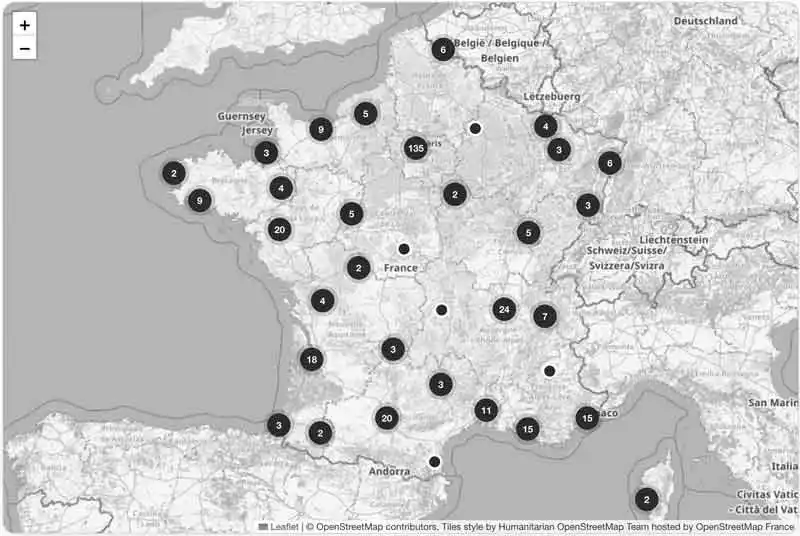
Search for a wealth management advisor among the 3 34 firms in the directory.
